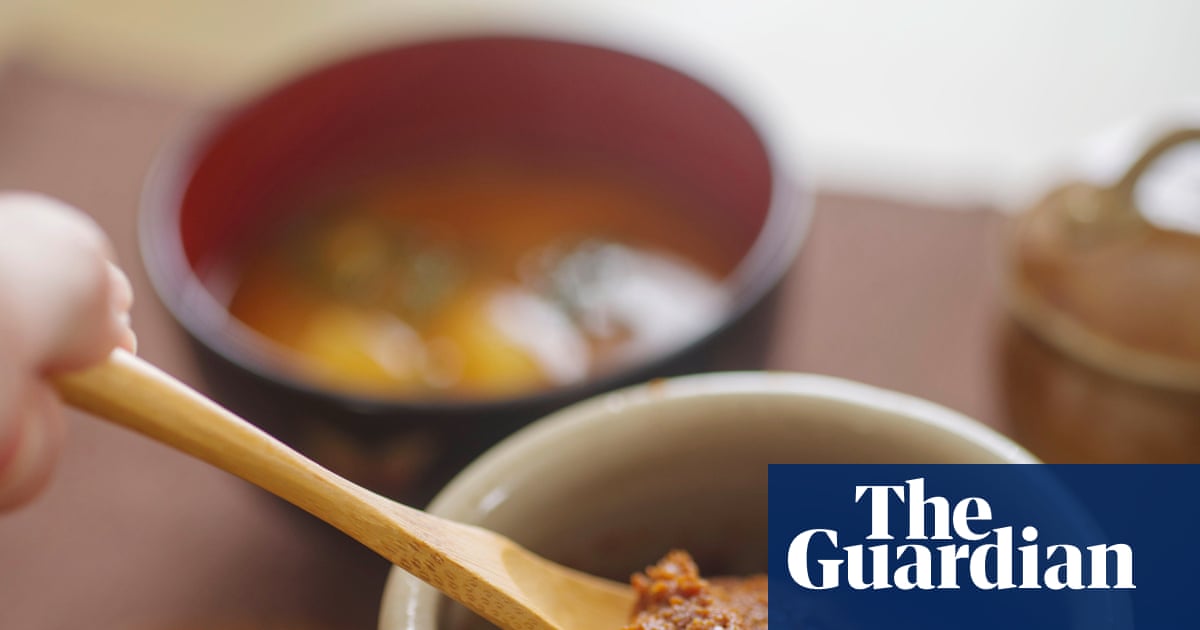

Our experts unpack the power of miso paste, and the unique flavour profiles you need for your home cooking
What’s the difference between white and red miso, and which should I use for what? Why do some recipes not specify which miso to use?
Ben, by email
“I think what recipe writers assume – and I’m sure I’ve written recipes like this – is that either way, you’re not going to get a miso that’s very extreme,” says Tim Anderson, whose latest book, JapanEasy Kitchen: Simple Recipes Using Japanese Pantry Ingredients, is out in April. As Ben points out, the two broadest categories are red and white, and in a lot of situations “you can use one or other to your taste without it having a massive effect on the outcome of the dish”.
Salty, savoury miso is (usually) made by steaming soya beans, mashing them with salt and koji, then leaving to ferment. “And the age is what changes the colour,” says Anderson. “White miso is not aged for very long – three to six months – and so it retains that beany, beige/yellow colour and tastes fresher, while red miso is aged for six months or longer, resulting in a darker colour and more funk.” The parallel Anderson often draws is that of a mild cheese and an aged or mature cheese. “Gouda is a good example,” he says. “It can be quite mellow and salty, but as it ages it develops a buttery, caramelised flavour.”
Got a culinary dilemma? Email feast@theguardian.com Continue reading…
http://dlvr.it/TQkhzp