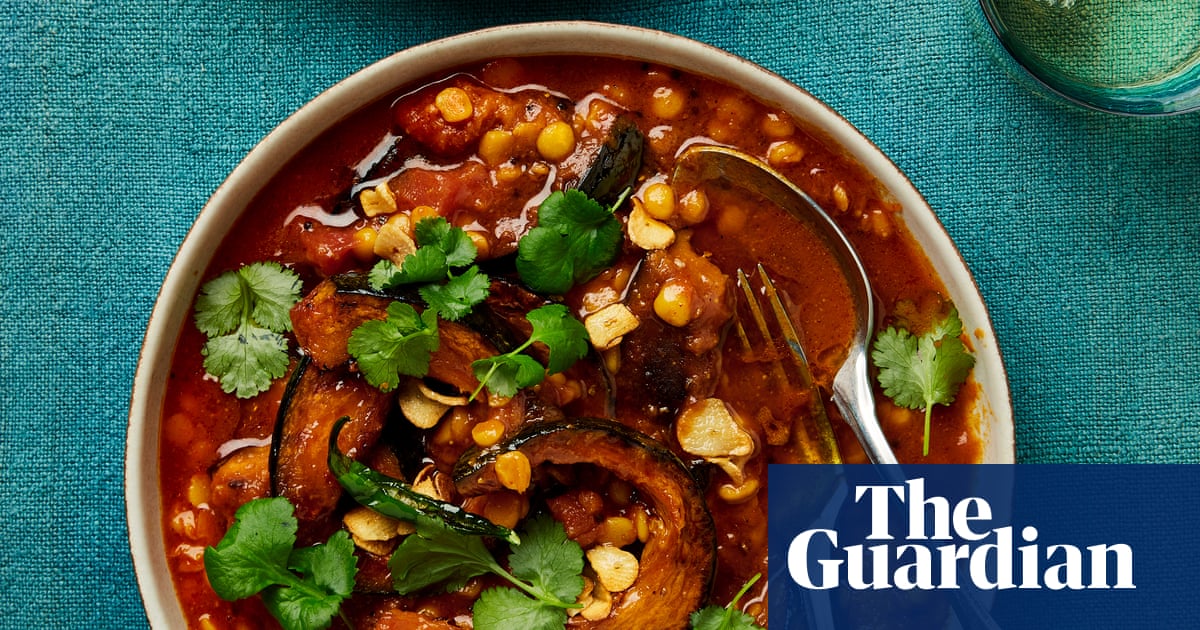

Top tips from a roster of experienced curry-makers, from adding a dollop of yoghurt to experimenting with pastes
I want to make more vegetarian curries, but most call for a tin of coconut milk and I’m trying to cut down on saturated fats. What can I use instead?
Jill, via email
Coconut milk brings silkiness and sweet richness to curries, and also mellows spices, so any substitute will likely change the nature of the dish. That said, if you really want to avoid the white stuff, Karan Gokani, author of Indian 101, would simply replace it with vegetable stock. Another easy swap (if you’re not averse to dairy) is yoghurt, says John Chantarasak, chef and co-owner of AngloThai in London, which is handy, because “that’s normally hanging about in the fridge”.
Not all curries involve coconut milk, however, and it’s these that perhaps offer a better solution to Jill’s conundrum. “Once you get past that idea, you go into two realms,” says Sirichai Kularbwong of Thai restaurant Singburi in London, by which he means wet and dry curries. The latter involve frying curry paste (“usually containing dried chillies”) and seasoning with fish sauce (“in Jill’s case, a vegan fish sauce”), tamarind and sugar. “The consistency of the sauce is never thin, and you pair it with root vegetables and flat beans, and eat alongside rice,” he adds. Meanwhile, a favourite wet curry that doesn’t call for coconut milk is gaeng om, made with “a simple curry paste of garlic, chillies and lemongrass boiled with good veg stock and seasoned with vegan fish sauce”. Veg-wise, to that base you’d typically add pumpkin, mushrooms, maybe pak choi.
Got a culinary dilemma? Email feast@theguardian.com Continue reading…
http://dlvr.it/TQBXBq